Smart Cities
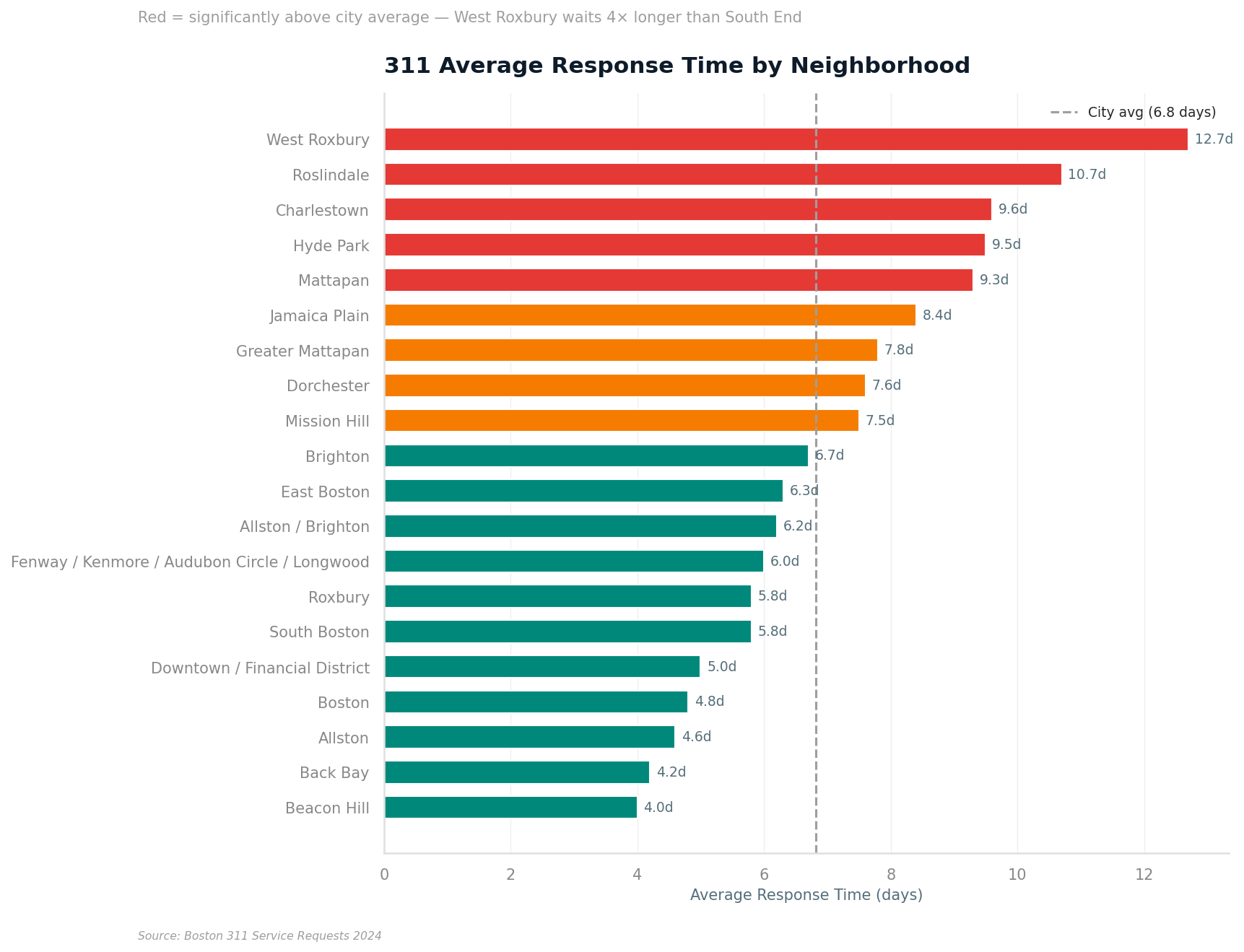
Boston 311 Service Equity Analysis
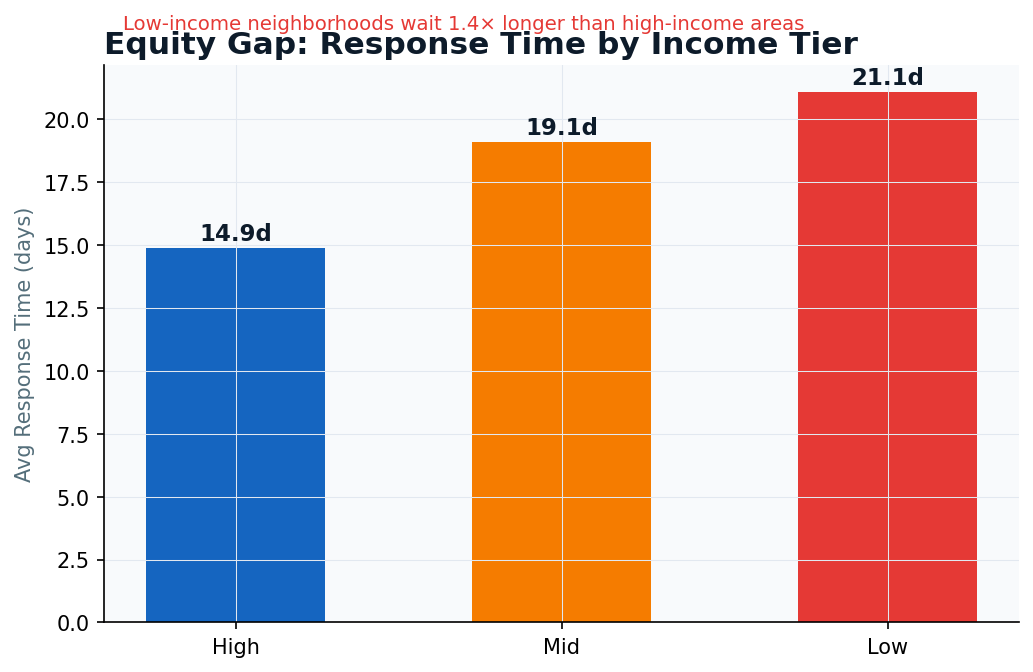
Analyzes 100,000+ Boston 311 service requests to reveal which neighborhoods face the longest response times — and what that means for urban equity and smart city investment priorities.
Urban Planner & Data Analyst
I analyze US cities using Python and open data — uncovering inequities in city services, tracking disaster risk, mapping economic patterns, and benchmarking digital governance — to help cities become smarter, more equitable, and more resilient.
I hold a BA and MA in Urban Planning and am completing my Master of Science in Urban Informatics at Northeastern University. My work sits at the intersection of city policy, geospatial analysis, and data engineering.
I built this portfolio to demonstrate how Python and open data can answer real urban questions — from which neighborhoods wait longest for city services, to which states face the greatest climate disaster burden.
My goal is to become a smart city architect who helps municipalities make evidence-based decisions that improve quality of life for all residents.
Smart Cities
Analyzes 100,000+ Boston 311 service requests to reveal which neighborhoods face the longest response times — and what that means for urban equity and smart city investment priorities.
Public Safety
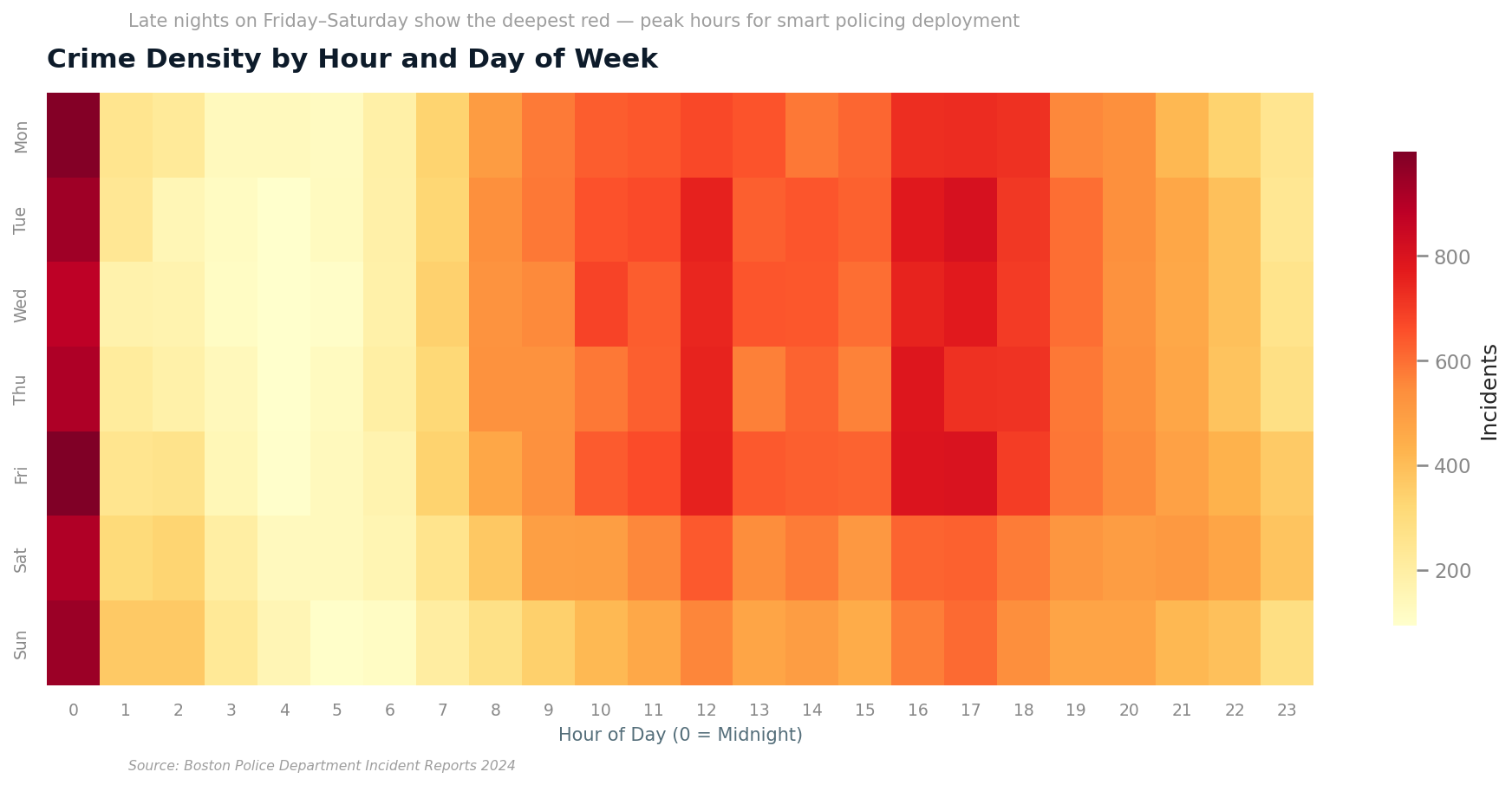
Examines Boston Police, EMS, and Fire Department incident data to map hotspots, track COVID's impact on emergency call patterns, and identify resource allocation gaps across neighborhoods.
Climate Analytics
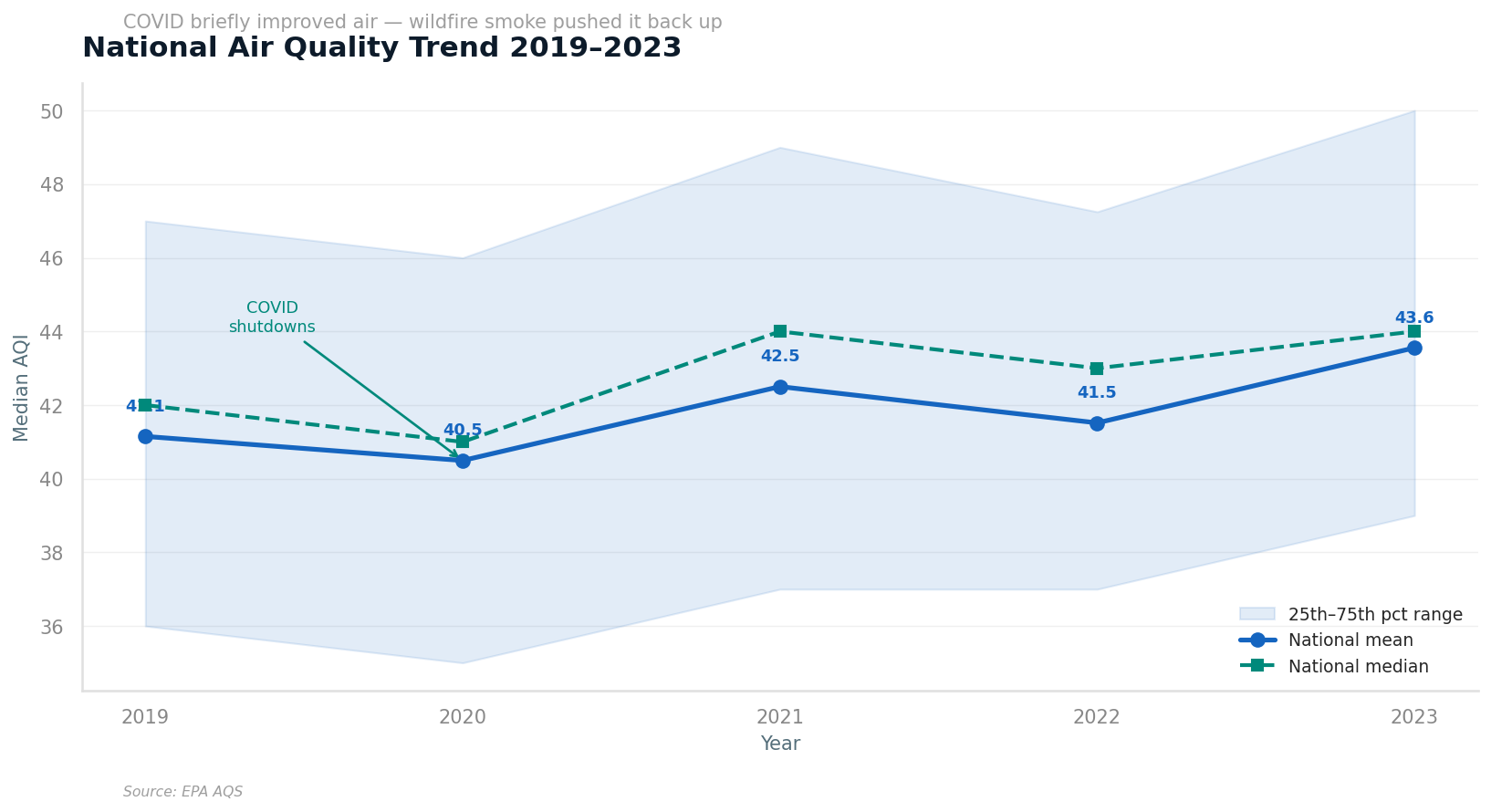
Tracks national air quality trends across all 50 states using EPA AQI data, identifying where air quality is improving and where climate-driven wildfire smoke is reversing decades of clean-air progress.
Mobility
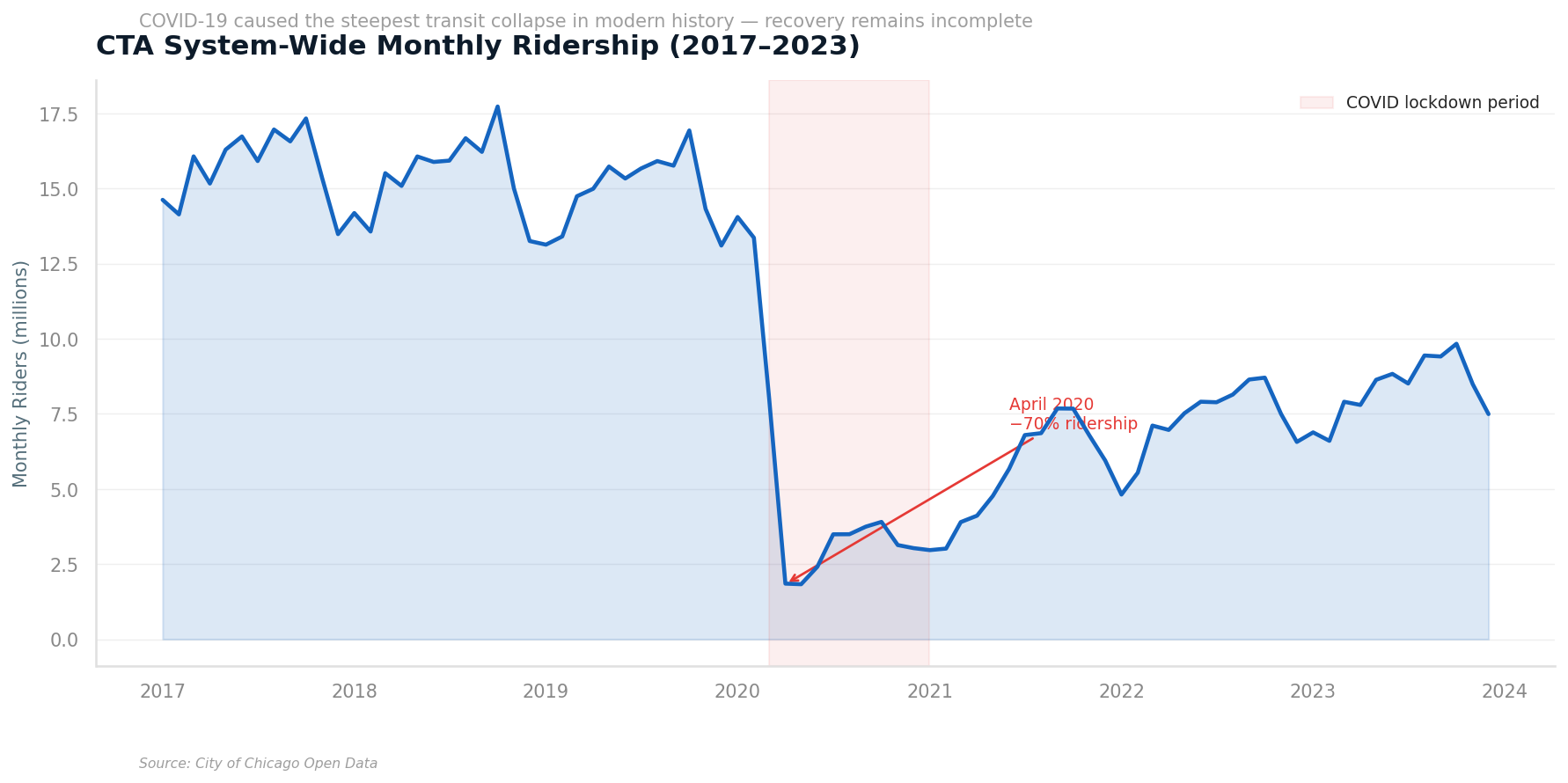
Analyzes MBTA and national transit ridership trends from 2018 to 2023 to quantify COVID's impact on public transportation and model the pace of ridership recovery across US metro areas.
Economic Analysis
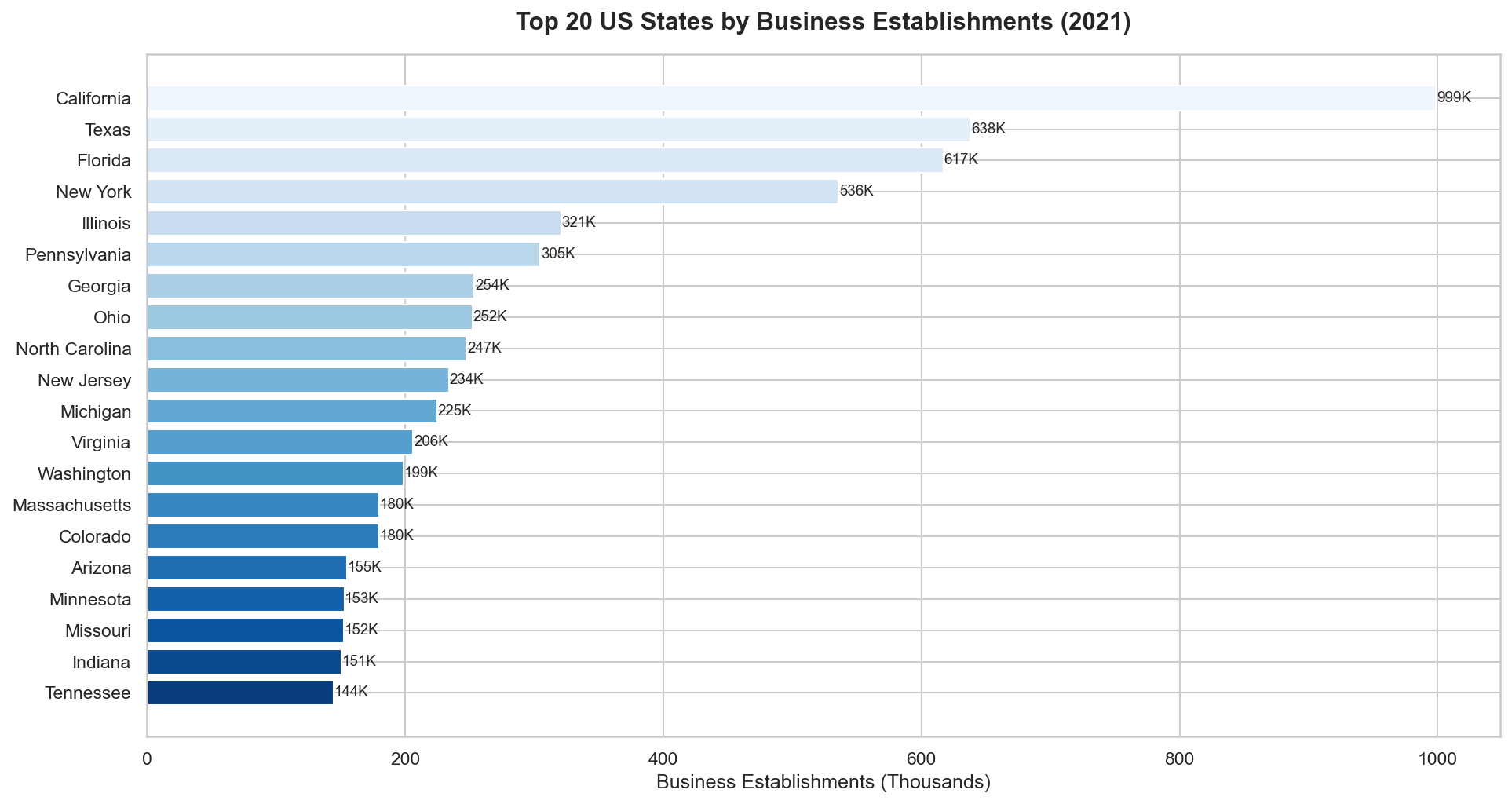
Uses Census County Business Patterns data across all 50 states to map business density, quantify small business dominance, and reveal the urban-rural economic divide in productivity and payroll per establishment.
Disaster Risk
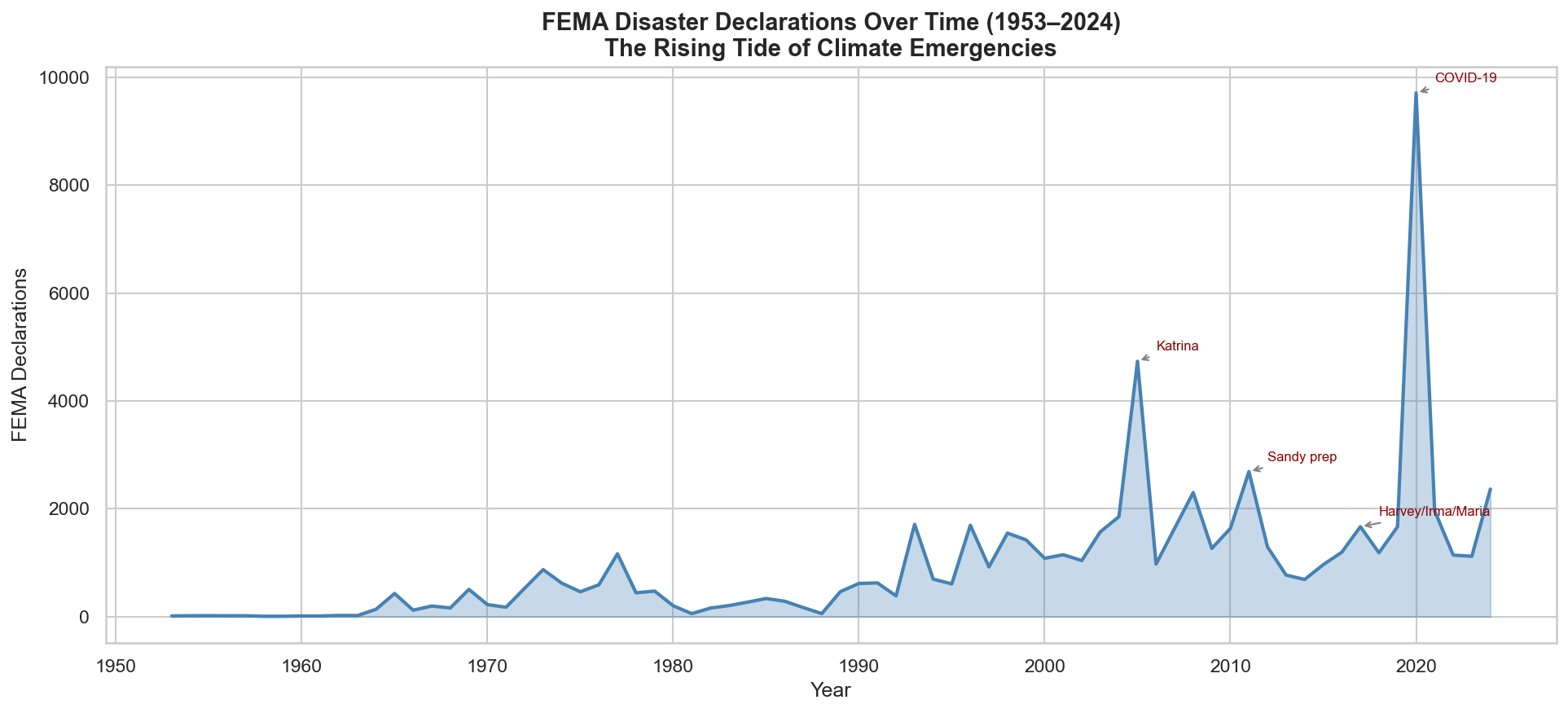
Analyzes 70,000+ FEMA disaster declarations from 1953 to 2024 to identify which states carry the greatest disaster burden, how disaster frequency is accelerating, and what COVID-19 meant for emergency management at scale.
Open Data
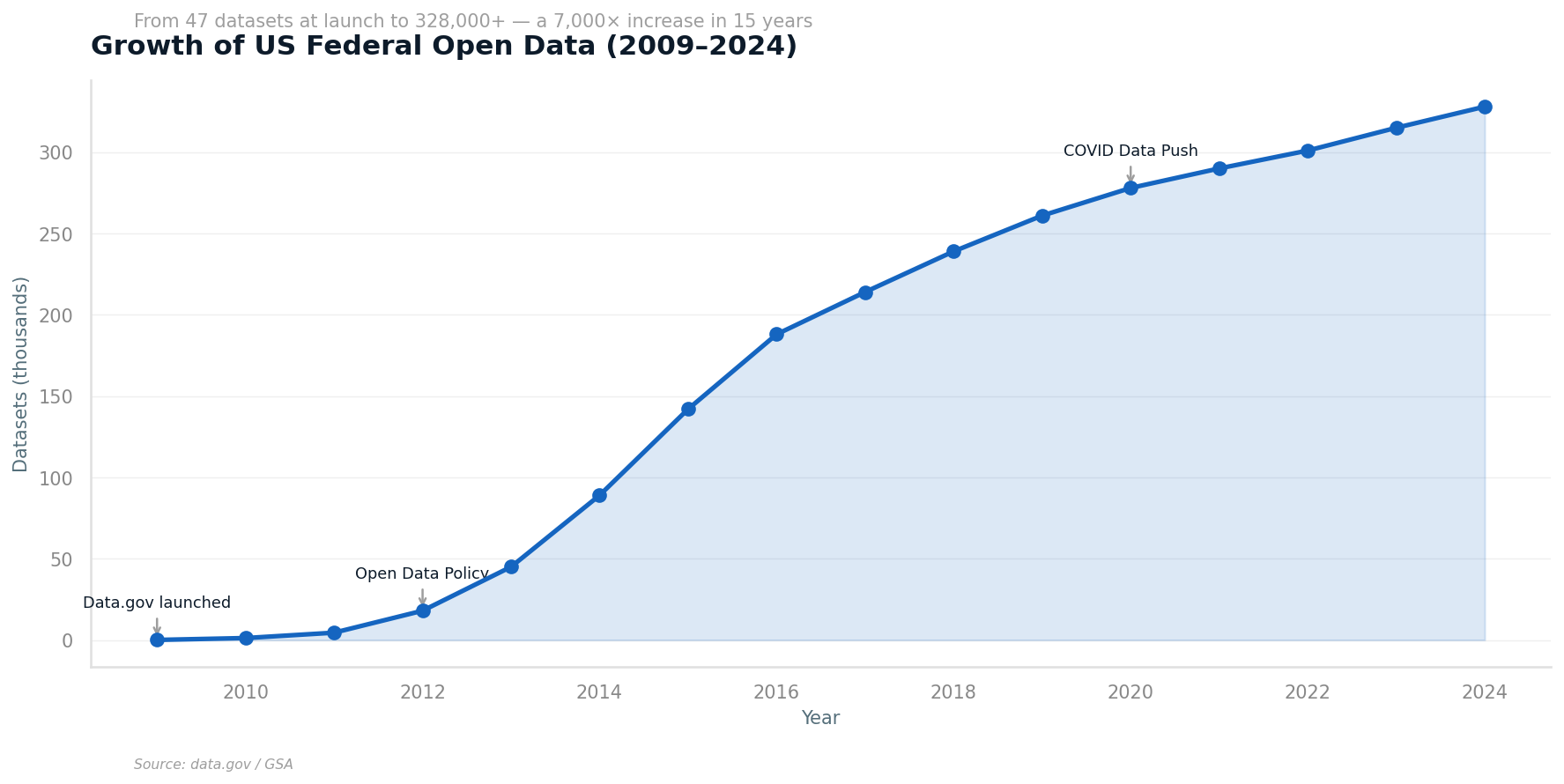
Scores US federal and state governments on open data transparency — measuring dataset quantity, format diversity, topic coverage, and accessibility. USGS publishes 3× more datasets than any other federal agency.
Climate Justice
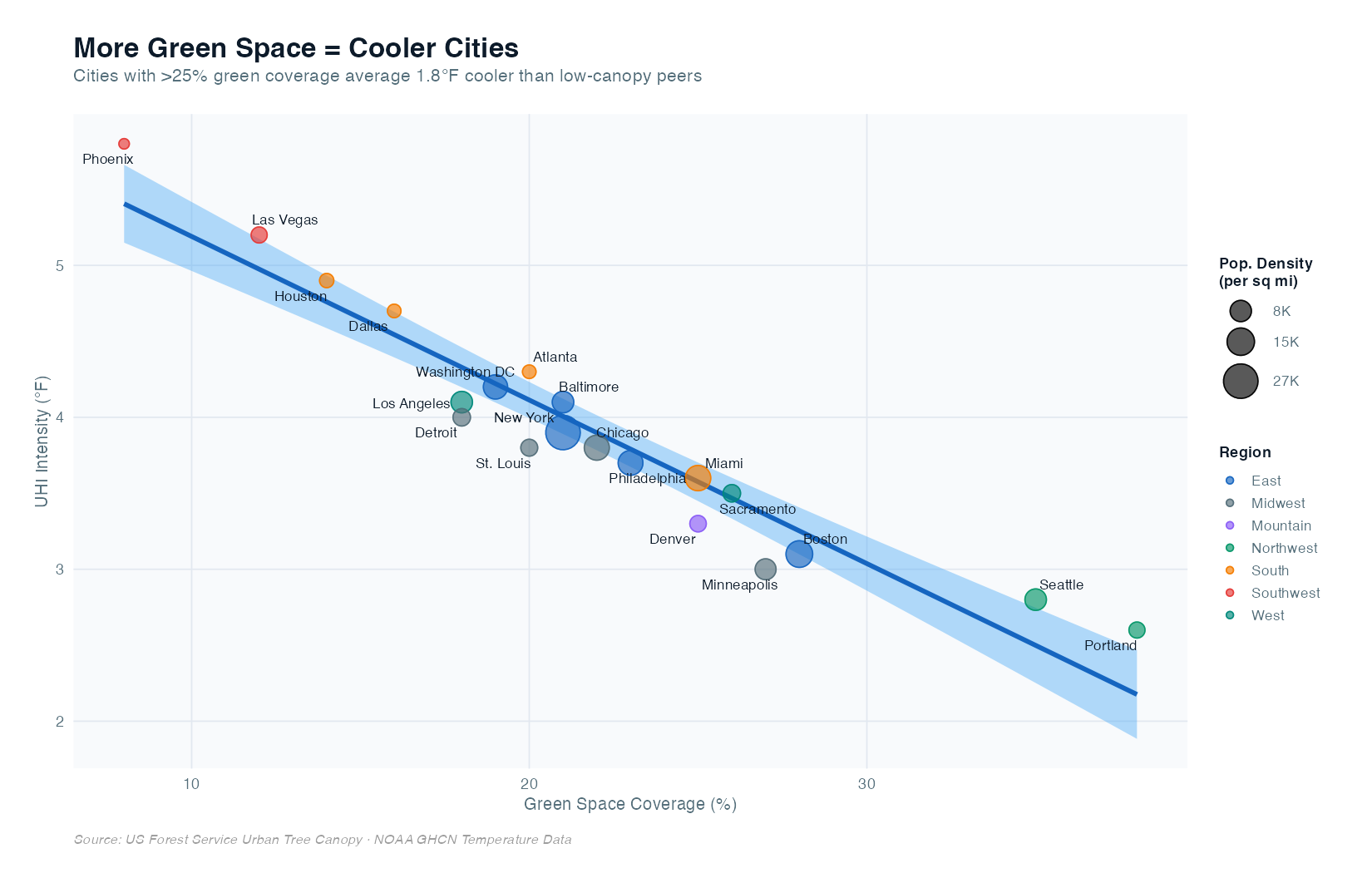
Analyzes heat island intensity across 20 US cities using regression, correlation heatmaps, and ridgeline distributions to show how green space, income, and density interact with urban temperatures.
Predictive Modeling
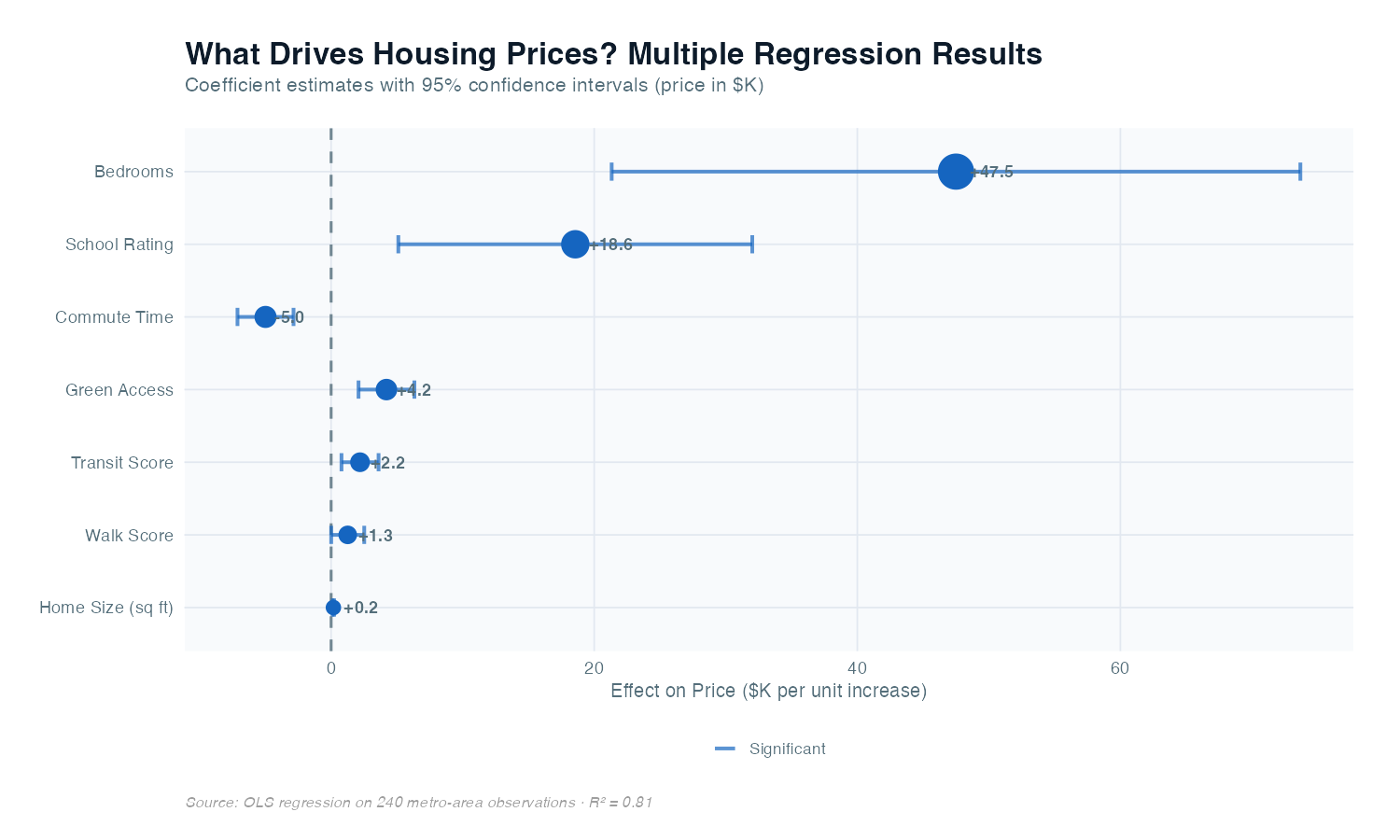
Builds a 7-predictor OLS regression model on 240 metro-area observations to quantify how transit, walkability, green space, commute, and schools drive home values across Tier 1 and Tier 2 metros.
Mobility Equity
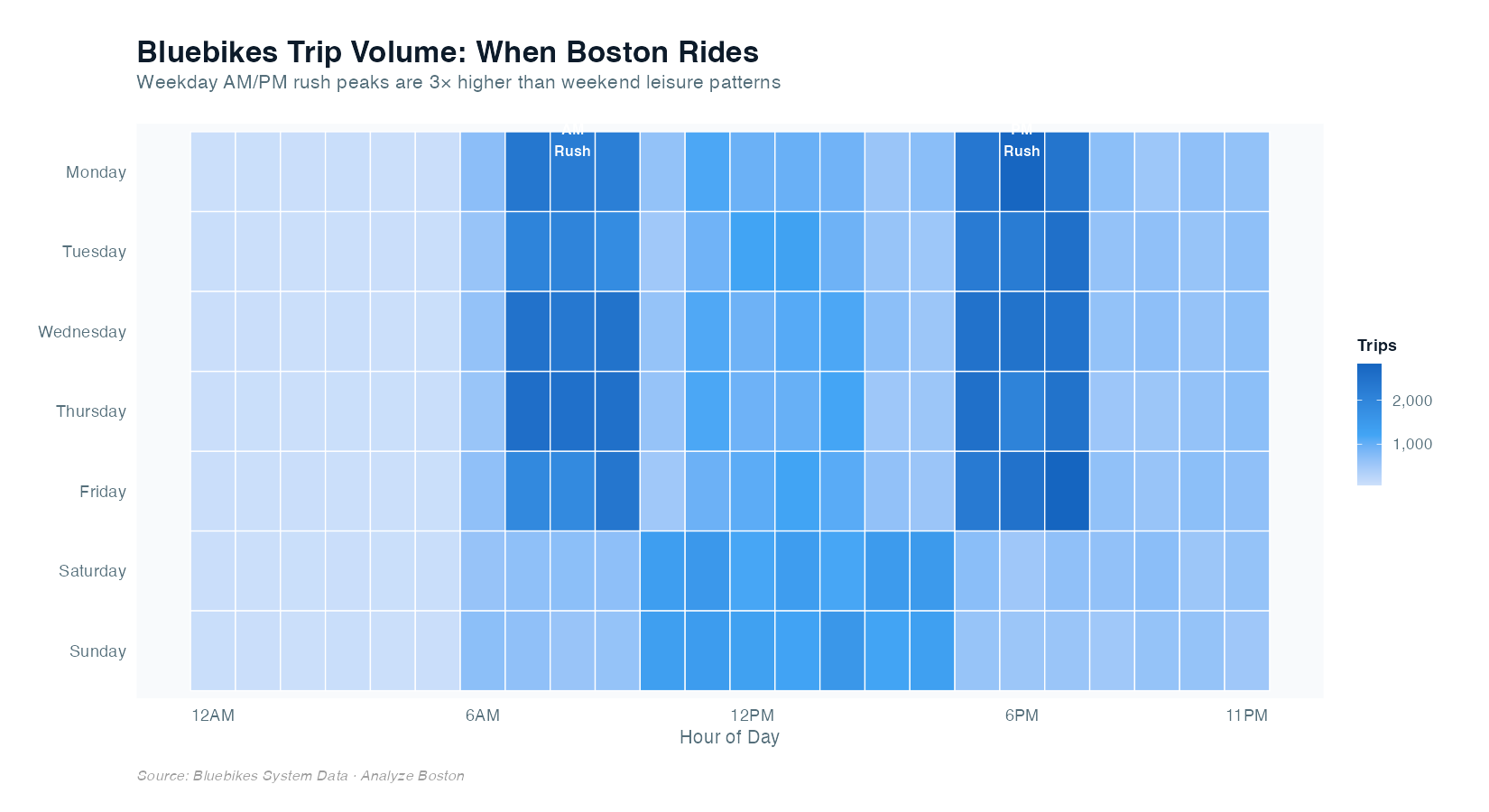
Examines Bluebikes trip patterns with a heatmap of 3.9M rides, exposes station access inequities across income quintiles, and measures how the e-bike program democratized mobility in underserved neighborhoods.
Health Equity
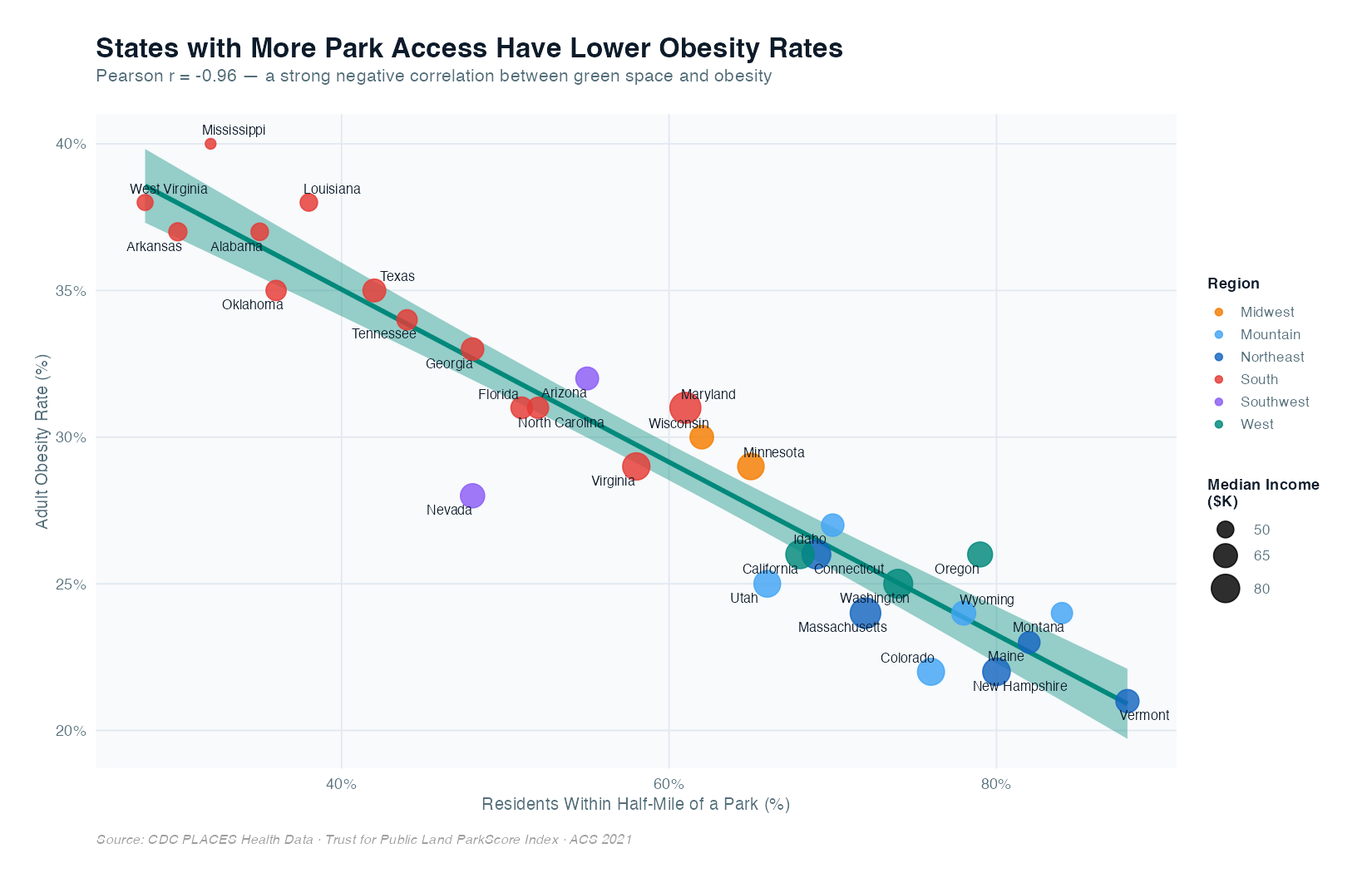
Tests the park-health hypothesis across 30 US states using Pearson correlation, quartile violin plots, and bubble charts to show how park access, income, and chronic disease burden intersect.
Sustainability
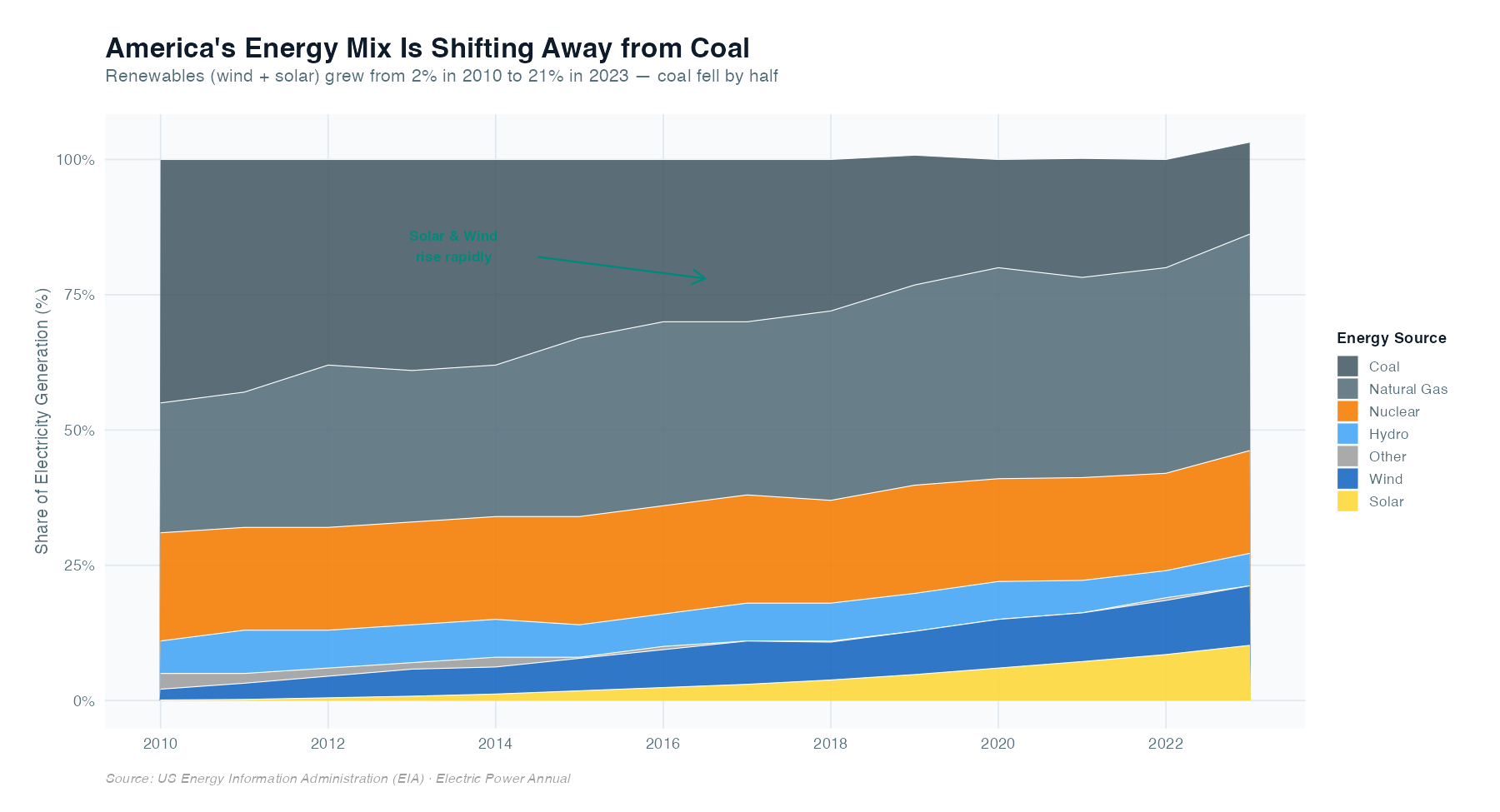
Tracks America's energy transition with stacked area charts, slope charts, and a composite efficiency index that scores 25 states on per-capita consumption, renewable share, and smart grid investment.
Streamlit App
Production Streamlit web app with 4 interactive tabs, live sidebar filters, Plotly Mapbox scatter map, service heatmap, and income-tier trend lines. Deployable to Streamlit Cloud in under 2 minutes.
SQL / Database
Production-grade SQLite database from 60,000 311 records with 10 analytical queries:
CTEs, RANK() OVER (PARTITION BY), LAG() year-over-year,
rolling 3-month averages, and SLA compliance checks.
Machine Learning
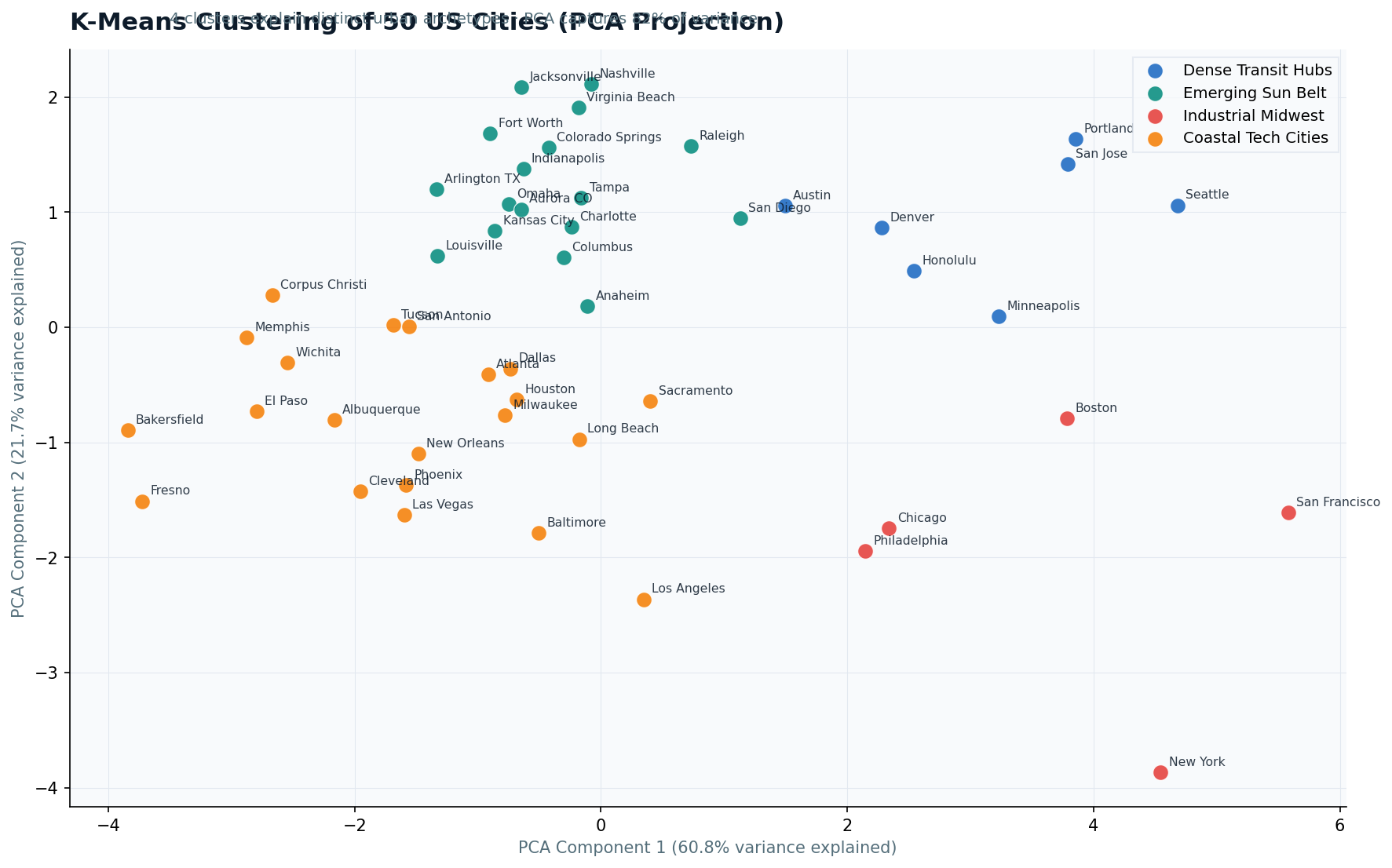
Unsupervised ML pipeline: StandardScaler → K-Means (optimal k=4 via elbow + silhouette) → PCA dimensionality reduction → radar cluster profiles for policy recommendations.
REST API
Production-ready FastAPI backend serving transit scores, park access, energy profiles, housing prices, and equity indices. Pydantic validation, CORS enabled, and auto OpenAPI docs — swappable to PostgreSQL for production.
Spatial GIS
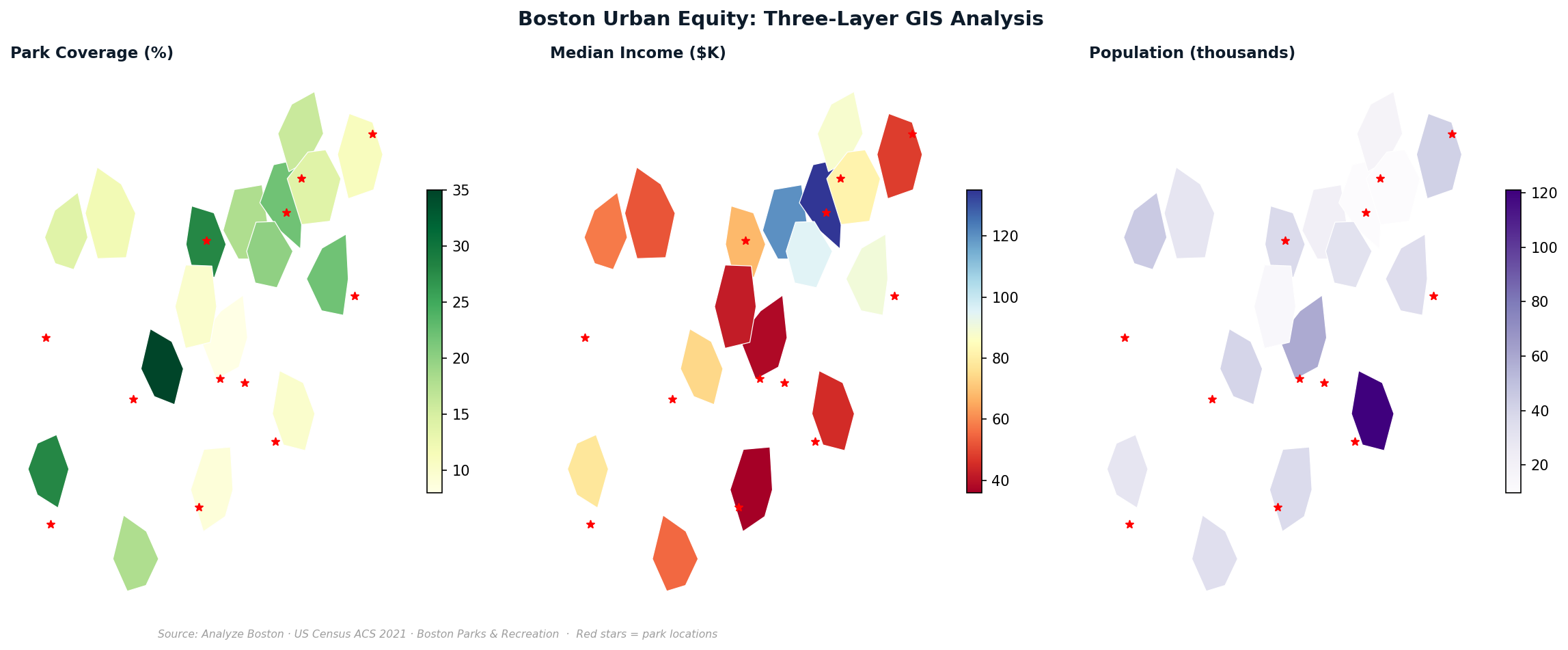
Real GIS operations on Boston neighborhoods: 500m park buffers, CRS projection to
EPSG:32619, unary_union(), spatial joins, percentage overlap calculations,
and income choropleth maps.
Two comprehensive, beginner-friendly tutorials — one for all 7 Python projects and one for all 5 R/RStudio projects. Covering environment setup, pandas, ggplot2, statistical methods, SQL, machine learning, REST APIs, GIS, and policy interpretation. Free on GitHub.
I'm actively looking for opportunities in urban tech, smart city consulting, civic data, and urban informatics research. If you're working on making cities smarter and more equitable, I'd love to connect.